
Data & AI Analytics
Key Features
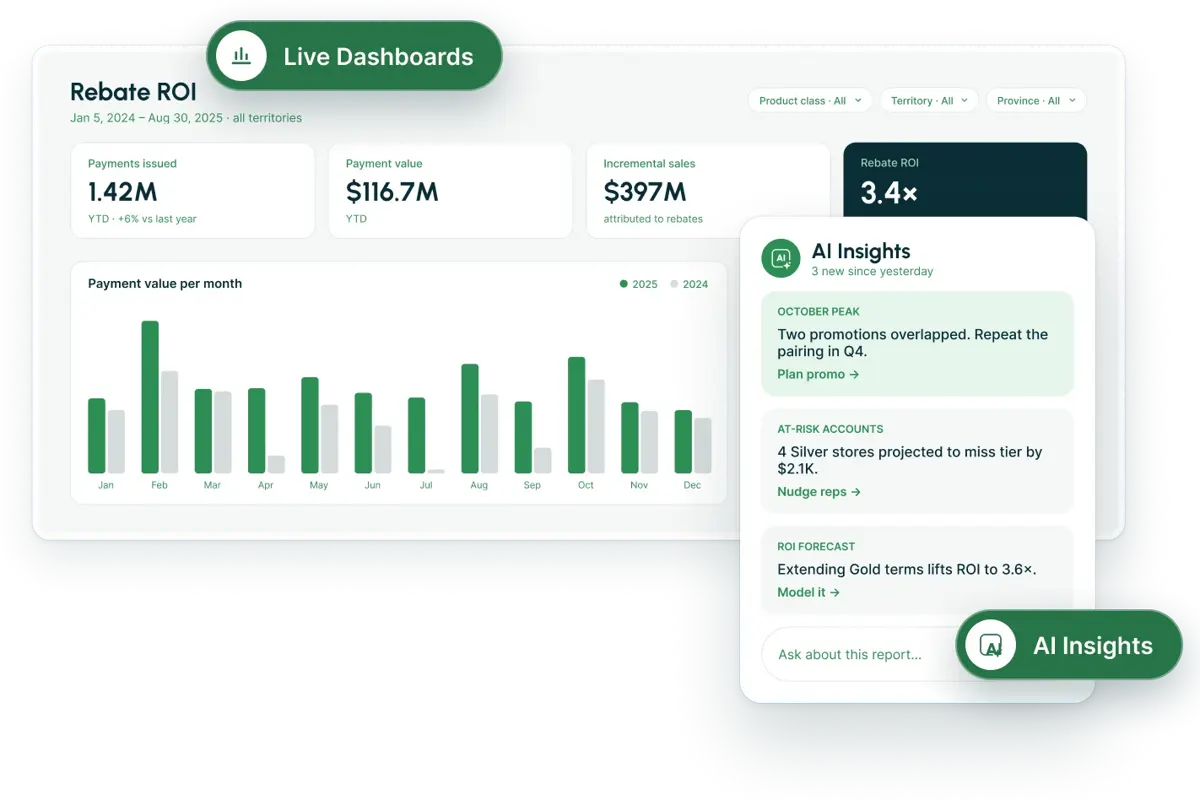
Live Dashboards
Track KPIs, map territories, analyze performance and maintain audit visibility.
Predictive Intelligence
Forecast trends, identify distribution gaps and anticipate out-of-stock risks.
Unified Data Intelligence
Combine field activity, shelf metrics, display compliance and POS data to measure execution and ROI.
AI In Store Action
Use natural language insights to prioritize inventory, improve execution and identify sales opportunities.
Ask
Which stores risk a stockout this week?
Demand outpaces stock at 3 West region stores by the weekend.
- Store 214 · Fresno2 days
- Store 187 · Modesto3 days
- Store 305 · Visalia4 days
How It Works
Step 1: Connect Your Systems
Connect ERP, CRM and sales systems through APIs, direct integrations or flat-file transfers.
Step 2: Unify Your Data
Combine sales, field execution, rebate, incentive and payment data in one view.
Step 3: Visualize Performance
Monitor KPIs and trends by region, customer and program with role-specific dashboards.
Step 4: Predict & Act
Forecasts and alerts flag risks and opportunities before they show up in results.
Proven Impact
AI Powered Analytics Results
60% faster reporting with automated data consolidation and pre-built dashboards.
40% better execution visibility with photo validation and field activity tracking.
25% less returns waste by identifying patterns and root causes earlier.
Results at a Glance
FAQs
Paygos is designed to integrate with your existing technology ecosystem, including ERP, CRM, accounting and sales management systems. Flexible integration options include APIs, direct system integrations and secure flat-file transfers. Data exchanges can be configured in real time or on scheduled intervals to support seamless information flow, reduce manual data entry and maintain consistency across business systems.
Yes. Paygos supports real-time data processing, providing up-to-date visibility into field activities, orders, rebates and payments through centralized dashboards and reporting. For integrations using batch data sources, such as flat-file transfers, processing can be configured on scheduled intervals to align with business and reporting requirements.
Yes. Paygos provides configurable dashboards, KPIs and exception reporting tailored to the needs of different user roles and business functions. Sales representatives, managers, finance teams and executive leadership can access relevant performance metrics, operational insights and reporting specific to their responsibilities. This ensures each team has the information needed to monitor performance, identify opportunities and make informed decisions.
Yes. Paygos uses AI-powered analytics to allow users to ask questions about sales, orders, promotions, rebates and field performance using natural language. The platform analyzes relevant business data to deliver insights, identify trends, highlight opportunities and provide actionable recommendations, making complex data easier to understand and use for decision-making.
Paygos uses AI-powered forecasting to analyze historical and current business data, identify emerging trends and anticipate future performance. Forecasting capabilities can help predict demand, identify potential stockouts and distribution gaps, project customer performance against rebate targets and uncover sales opportunities. These insights enable businesses to anticipate challenges, optimize program performance and make proactive, data-driven decisions.
Paygos validates incentive and rebate payments against approved program agreements, eligibility requirements, supporting documentation and authorization workflows before disbursement. Every transaction is recorded and traceable, creating a centralized, audit ready record of program spending and payment activity. This provides a reliable foundation for financial reporting, program reconciliation and ROI analysis.
Paygos follows a structured implementation process designed to accelerate deployment and minimize disruption to existing operations. Our team works with you to define requirements, configure programs, establish integrations, test workflows and launch. Implementation timelines are based on program complexity, integration requirements and business needs, with clear milestones established at the outset.